Tag Archives: Ageing

Life Time

Time is such a fascinating, elastic thing. We humans can think ourselves into the past, and project ourselves into the future, but have a devil of a time staying put in the present. Meditate for just ten minutes and watch the handsprings your mind does.

Ageing has made me more acutely aware of time. I said to Heather tonight as we were carefully parsing out our one-square-each of after-dinner chocolate that if we knew we were going to die tomorrow, we’d probably eat the whole bar.

Eighty-five year old, Nadine Stair wrote this poem about how she might have better used her time on earth:

I’d Pick More Daisies
If I had my life to live over,
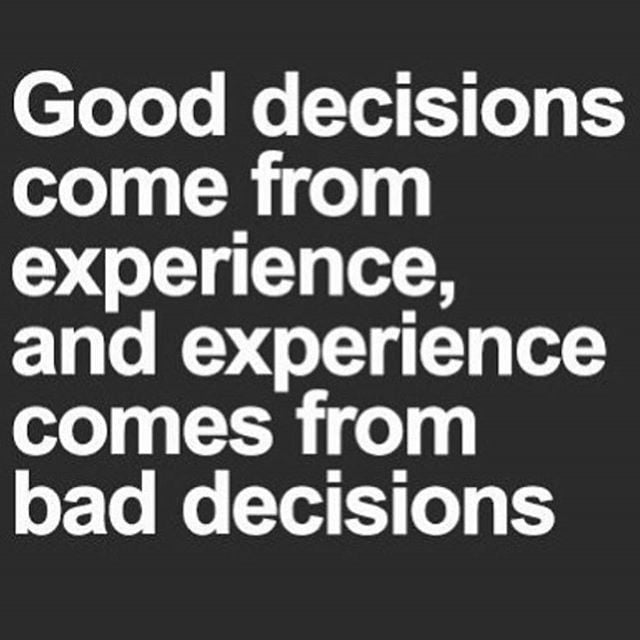
I’d try to make more mistakes next time.
I would relax. I would limber up.
I would be sillier than I have on this trip.
I would be crazier. I would be less hygienic.
I would take more chances, I would take more trips.
I would climb more mountains, swim more rivers and watch more sunsets.
I would burn more gasoline. I would eat more ice cream and less beans.
I would have more actual troubles and fewer imaginary ones.
You see, I am one of those people who lives prophylactically and sensibly and sanely, hour after hour, day after day.
Oh, I have had my moments.
And if I had it to do over again,
I’d have more of them.
In fact, I’d try to have nothing else.
Just moments, one after another.
Instead of living so many years ahead each day.
I have been one of those people who never go anywhere without a thermometer, a hot water bottle, a gargle, a raincoat, and a parachute.
If I had to do it over again, I would go places and do things.
I’d travel lighter than I have.
If I had my life to live over, I would start barefooted earlier in the spring and stay that way later in the fall.
I would play hooky more. I wouldn’t make such good grades except by accident.
I would ride on merry-gorounds.
I’d pick more daisies.

And here’s another view in this short video from Heart and Stroke Foundation:

The beauty of a life is that there really is a lot of latitude for choices.

A Sutra a Day: IV-33 – Tiny Instants of Time Add Up


For some reason, maybe because of teaching some workshops on ‘How to Work with Older Students’, I seem to be preoccupied with ageing. It may be because I am, er… getting on myself.

A newsletter landed in my email today from my friend and colleague Maggi, who was writing about ‘Age and Attitude’. She says,

I have a bad attitude to ageing. In fact I really don’t know how to go about it.’

Well, who does know how, really?

One of the problems is when to declare when one is old or aged. It’s a cop-out to keep saying it’s sometime in the future.

The yogis have figured it out, though. Here’s what Satyananda Paramahamsa says about becoming old:

Things go on becoming old every moment but we call them old only after the end of the process….

We don’t know exactly when a child becomes a young man or when a young man becomes old. The moments that have ticked over to add up to a lifespan are distinct units, but when they overlap and move forward with acceleration, as they do, they give us the impression of continuity – that is time. We look at the whole process and divide it into Past, Present, and Future, but for the meditator, for one practising mindfulness, there is only this moment, this breath, this heartbeat.

Perhaps that is the key to ageing gracefully.

Krsana-pratiyogi parinama-apara-anta-nigrahyah kramah

Sequence [means that which is] correlative to the moment [of time], apprehensible at the terminal-point of a [particular] transformation.*

*The Yoga-Sutra of Patanjali, translation and commentary by Georg Feuerstein.

A Sutra a Day: III-41 – Listening for a Finer Sound

Source: moonassi.com via Ellie on Pinterest


As I’ve gotten older, my sense of hearing has paled a little. I do, however, compare myself to others my age and think, ‘I’m not as badly off as they are.’

Some people attempt to save their sense of vision from presbyopia (farsightedness) as they age by doing eye exercises. While I’ve never heard of ‘ear exercises’ – remedies to help correct the age-related hearing loss that’s called presbycusis – but probably someone somewhere has put together yoga poses that treat this condition.

I was surprised to learn that hearing difficulties affect over half of all people over 60 years old, making them the second most common cause of disability in older people.

Teaching yoga compassionately means speaking clearly and projecting one’s voice well. This is even more important for women teachers because their higher-pitched speech is harder for seniors to understand.

If you are an older person, or if you spend time with seniors, you might like to take a little look at this video to see how the inner ear works. With its tiny bones and cochlea, infinitesimal hair cells and sensitive nerves, the ear organ is the most amazing mechanism.

We release tension from the ears each time we do a yoga relaxation by first softening along the jaw line, then the hinges of the jaw, and finally relaxing the ear canal inward and forward towards the eyes.

The reward for complete relaxation of the sense of hearing is the silence of one’s own inner peace.

Srotrakasayoh sambandhasamyamaddivyam srotram

Samyama on the relationship between the sense of hearing and space develops an extraordinary sense of hearing.*

*Patanjali’s Yogasutras, translation and commentary by T.K.V. Desikachar.


A Sutra a Day: II-15 – Embracing What Is

Helen Keller

I have a dear friend who is very sensitive about her ageing process. She is 3.5 years older than me, and looks at least 10 years younger than her chronological age. Here’s to good genes and HRT! The thing that worries my friend most is the fear that she is becoming increasingly forgetful.

I can relate. I don’t know that solving crossword puzzles and other “brain gym” activities or even doing regular yoga practice will hold back the sands of time. I used to, upon meeting a brand new class of 15-20 students, remember their names by the end of the session. I struggle more now until I’ve met students on several occasions.

My untested theory is that one’s brain can only hold so much information and by the time we reach senior years some data has to be eliminated ;)

There are so many ways that ageing can be difficult, from the unrelenting effects of gravity on muscles, skin and bones to the attrition of sense organs: sight, hearing, taste, and smell, for instance. I firmly believe, however, that one’s sense of humour does improve with age.

Perhaps growing old pushes our noses right up against some age-old wisdom: Change is the essence of our existence, and thus, the need for security will ultimately remain unfulfilled.

There was a wise woman around when I was a young girl who was held up to us school kids as a guiding light, inspiring for being the first deaf blind person to receive a university degree. Her name is Hellen Keller, and she was a prolific author, social activist, and the subject of a book and a film, The Miracle Worker.

Perhaps she was also a yogini as two of her quotes below seem to support some fundamental yoga philosophy:

Avoiding danger is no safer in the long run than outright exposure. The fearful are caught as often as the bold.

All the world is full of suffering. It is also full of overcoming.

parinama-tapa-samskara-duhkhair-guna-vrtti-virodhac-ca duhkham-eva sarvam vivekinah*

Painful effects from any object or situation can be a result of one or more of the following: changes in the perceived object, the desire to repeat pleasurable experiences and the strong effect of conditioning from the past. In addition changes within the individual can be contributory factors.*

*Patanjali’s Yogasutras, translation and commentary by T.K.V. Desikachar.

A Sutra A Day: II:9 – Good for Any Age!


I’ve been featured in an article in the August/September Australian Yoga Journal that’s entitled “Yoga at Any Age”. The gist of the article is that yoga has a myriad of gifts to offer and the value of them increases with age.

My particular input into the article emphasises that the hip arthritis I dealt with over the years propelled me into more reflective yoga practices. But it also helped keep me stay agile, mostly pain-free and able to teach yoga for the eighteen years I had the condition.

I learned a vital truth in the process: yoga is not an insurance policy to make you impervious to disease, ageing, and ultimately dying. But it can foster growing old and staying centred with ease and gracefulness.

Here are a few more benefits:

• Flexibility and mobility

• Relaxation

• Comfortable sleep

• Pain relief

• Community

Svarasa-vaht vidusah api tatha arudhah abhinivesah

*The survival instinct is self-perpetuating and as such is dominant even in the learned

*Patanjali’s Meditation Yoga, translation and commentary by Vyn Bailey.


A Hassle to Age, But Yoga Helps

Grief happens when facing the results of ageing. This is not news to anyone over 40 who finds out they will soon need to buy their first pair of reading glasses. Or when you have to visit your dentist and hear him refer you to a peridontist (gum doctor). Or, you notice that more than the problem of gums and hairlines receding, your waistline and midriff are preceding.

I suppose I can make light of all of the above because I’ve gone through these dilemmas and find myself still here.

Lately I’ve seen some people who are dear to me grappling with osteoarthritis – another experience I’ve endured.

Human beings are blessed in one sense to have long life, but cursed in another way that the body-machine suffers inevitable wear-and-tear over the years. Knees, those extremely flexible and Herculean joints, are especially prone to degeneration. Hips, the miraculous fulcrum of our body, are also susceptible. And, of course, all of the spine from Atlas to Sacrum, erodes from much bending, flexing and rotating.

There’s a point when we’re growing older that we end up we facing unpleasant facts because we must. Skirting them becomes too uncomfortable, painful even. It’s time to get those X-rays done and the appointment made with the orthopaedic surgeon.

The process one goes through when dealing with any part of the body wearing out is reminiscent of Kubler-Ross’s “Five Stages of Loss: Denial, Bargaining, Anger, Despair and Acceptance”.

I can remember my first visit to an orthopaedic surgeon who told me that I needed hip replacement surgery. Part of my bargaining process was to set up two more visits to surgeons just see if I could get a more positive diagnosis.

It was a relief when I finally got to the acceptance stage but that took years of grappling with my emotions and the disease.

Having a yoga as a life-time companion makes all the difference because there are all the tools at hand to meet and deal with each of the stages. There are physical routines to relieve pain, breathing to create energy, meditation to foster equilibrium, and relaxation to cultivate openness and embrace the inevitable.

Freedom

Choosing How You Do Elderhood

Lily

I spent the last weekend with my 7 woman friends, aged late 40′s to mid-seventies. In this company, I participated in many of those familiar-by-now conversations about medical complaints, impending surgeries, and just plain loss of hearing, eyesight, and libido. (Does loss imply ever finding those items again?)

Did we sound like broken records? Absolutely not.

We’ve surprised even ourselves that ageing isn’t really such a scary thing. I can honestly say that each one of us has experienced more wisdom, wholeness, authenticity, and improved sense of humour with the arrival of age. Who would have thought?

Well, we would. We’ve invested much time and energy in making something out of our difficult pasts, and for some of us, current hardships. In simple terms, we know that what creates quality of life is how we choose to relate to people and situations. Everyone is dealt certain cards, but it’s up to us what meaning we assign to them.

This morning I woke up into the blues. There was plenty of evidence I could find to justify feeling low. I could have stayed in the grip of the citta vrtti, but I took myself off to the Yoga Shed, did appropriate practice and came back on an even keel.

It would seem that the purpose of having the gift of more years is to learn how to live.

Here’s a bit of inspiration for you if you are getting on (we all are) or if you know someone who is (who doesn’t?): Jane Fonda on TED


The Things That Make a Difference

Repetition can be so tedious for a person like me who gets bored easily and likes to keep moving to the next exciting thing.

Fortunately for me, more than 40 years ago, I got on to yoga, or maybe it grabbed onto me, and we’ve been together through thick and thin ever since.

Things that one does over and over, practices kept up for a long time, and relationships lovingly fostered have an lasting effect on one’s character.

Think of all the music lessons that cultivate concert performers, spiritual disciplines that lead to bliss states, good parenting that creates good citizens – all making a case for stick-to-it-ness.

Last week I spent 4 days with my women’s group which meets mostly just once a year. We come from New South Wales, Canberra, Western Australia, South Australia and Victoria. The group has been meeting now for 12 years, but most of us have been friends for decades. We’ve seen some of our businesses come and go, relationships change, family additions and deaths, and our own journey of ageing and disease. One of our number died a number of years ago, and at this time there are 8 of us.

There’s been a generous outpouring of financial, emotional and spiritual support for any one of us who needed it.

Every time we meet we deepen our ties. It’s moving and inspiring the way our group has committed to friendship.

Repetition, whether it’s doing your yoga practice, watering the garden, or tending to friendships is a living affirmation of what you hold dear. Michael Leunig, the Australian philosopher/cartoonist/writer says the repetition of our practices and rituals carries an indelible and resonant quality into one’s heart. He says, “Each time you practice, something important is revitalised and strengthened.”

Here’s how seven of us girls looked yesterday morning at Morialta Falls at the foot of the Adelaide hills:

DCW


Important Yoga Practice No. 3: Surrender


Just Sitting

Some time long ago, I heard or read that the purpose of yoga was to learn to surrender.

I tried on that definition on for a while. The concept of surrender sounds good on paper, but I found the practice of it difficult, especially in relationship, the very place where it is best taught.

To me, surrender means being willing to give up being right and having your way. It means accepting things as they are even when you are resisting them with all your might. It means knowing the difference between capitulating and letting go.

I’m inspired by people who are forced to learn to surrender by fate, and who grow in their humanity by having to deal with tremendous difficulties. Think, for instance, of how the long incarceration of Nelson Mandela was the making of him. There are also those from everyday walks of life who willingly yield to their circumstances, like the long-term care givers of ageing spouses or parents.

How does a yogi practice surrender? Simply by placing yourself regularly on the mat or meditation cushion, rather than putting selfish interests or busy-ness ahead of practice. By considering others’ wants and needs as important as your own. By allowing situations to develop in their own way and not stepping in to control every detail.

Surrender is predicated on trust which is also the reward of surrendering. Going through life in a trusting manner means living in world which is safe, surrounded by people who are supportive, and leads to being free from fear.

Surrender is the path to what I now see as the goal of yoga: freedom.


Not Bad for Your Age….

I found myself saying the above cliche to my husband this evening…. I can’t even remember the context. I shouldn’t have said it. I hate the phrase and all the other quasi compliments and expressions relating to age that are bandied about.

Have you ever noticed how hard it is to find a joyful, friendly birthday card for anyone over 40 years? You end up having to settle for a blank card with a pretty design on the front.

What does “not bad for your age” mean anyway? That you are good for your age?Does it mean that we should lower our expectations of what you can do, say, look like? Is it all we can say of a positive nature under the circumstances?

Sometimes I like to embellish this post with wise words and I can almost always find some on a quotes web site; here’s a couple:

The great secret that all old people share is that you really haven’t changed in seventy or eighty years.  Your body changes, but you don’t change at all.  And that, of course, causes great confusion.  ~Doris Lessing

What most persons consider as virtue, after the age of 40 is simply a loss of energy.  ~Voltaire

Interestingly, the above site has more things to say about ageing than any other topic I’ve looked for recently. Most of the quotes, sadly, are deprecating.

I like what my friend Collyn, in his early eighties, has had as a ready reply for age detractors: that he is “not bad for any age”.

The beautiful thing about yoga is that it is for all ages. The baby in utero, her mother, and her grandmother. Kids in school and older kids in grad school. Sportsmen, mechanics, and musicians. Retirees and renunciates.

At every age and stage, yoga is a springy system and will bend to your needs. Not only that, it will help foster your well-being, sweet nature and long life. And perhaps it will give you enough detachment so you will be merely amused by any belittlers.

Burmese Granddad