January is ‘The Month of Good Intentions. It’s the time to get back on track if you’ve taken a detour off the straight-and-narrow. January first is a blank canvas, a fresh sheet of print paper, a blank slate.

January is ‘The Month of Good Intentions. It’s the time to get back on track if you’ve taken a detour off the straight-and-narrow. January first is a blank canvas, a fresh sheet of print paper, a blank slate.

Why bother with principles and foundations?
This week, I’m teaching a module on principles and foundations of yoga to trainee teachers. It sounds like a big topic, so where to start?
Of course, The Internet! I googled the above terms to see what was out there. Not so much, it would seem. Then, I wondered about the definitions of the terms.
Finally, I thought, why are we bothering anyway with these subjects in a teacher training? Thirty-seven years ago, it wasn’t part of my training.
Well, it should have been. […]

A couple of years ago I was inspired to study the Yoga Sutra of Patanjali. I blame Michael de Manicor of the Yoga Institute for giving me the necessary prod. I heard him speak at a Yoga Australia conference, and Michael’s talk enrolled me in finally having a look at the Old Sage’s writing.
I had tried to study Patanjali a few times over the course of several decades. I collected a number of commentaries, mostly unread, along the way. I decided to take a drastic step. […]

image via Pinterest
Yoga is elastic. It stretches to fit you now, and then, miraculously, it will give you a perfect fit in the future. All you have to do is jump on for the ride and stay on.
The best thing about yoga for me is the very way it is defined: union. And also that it so naturally cultivates community and connection.
Yesterday I had breakfast with three old students of mine. I don’t mean they are old. They are younger than I am. Actually, we’ve all grown older since we started on the yoga path. […]
Why do I do it? Why do I watch a television series about not-so-nice people doing things that are definitely not nice. It could simply be a fascination for the shadowy, seamy part of life, but it could also be because the programming is excellent. And, sometimes the shows I watch stimulate my thinking about the way humans behave.
For instance, watching an episode of True Detective last week, I heard the cynical protagonist intone, “This is a world where nothing is solved… time is a flat circle. […]

It’s been 4 years since I moved to the country from Sydney. One of the things I feared when I left the Big Smoke was that I would be forgotten by the many yoga students and teachers who were my family there for more than thirty years. I used to know everyone who was anyone in yoga. I couldn’t go anywhere without running into someone from my yoga community. I loved that.
I got to test my theory/paranoia when I was in Sydney for a brief time last week. […]

Yoga is ancient. It is forever deep and wise. […]
You must know that expression. It has a few spins on it: you’re only as good as your last sale; you’re only as good as your last performance; you’re only as good as your last game….
I watch my stats on “Yoga Suits Her” carefully to measure how popular my posts are, that is, how many views I get on a post. My mood lifts when I see numbers in the hundreds. […]
Am I a bad yoga teacher? Sometimes I think it’s just stupid to be teaching triangle pose to a student who has a physical complaint that’s causing them mental distress.
Sometimes I just want to say, Whoa, let’s just sit down for a minute and see what’s up. In this moment, what’s going on? Instead of glossing over what appears to be a strong feeling or a difficult attitude.
What’s the point of doing a lateral stretch when someone’s dog just died or they’re in pain in their body or they’ve been depressed for some time. […]

In 1992 I stumbled on a book called Seven Habits of Highly Effective People by Stephen Covey. […]

I love it when students tell me that because of attending yoga classes they’ve become inspired to do some practice on their own at home. We’ve designed the yoga anywhere practice cards for that ex press reason.
I love it when yoga clicks with people and they want to attend yoga classes regularly and often.
And I love it when a keen student decides they want to teach yoga and embarks on yoga teacher training to get qualified.
But I also don’t mind if you have no interest in any of the above. […]
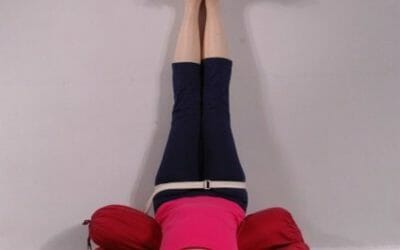
In this morning’s yoga class there were six students: one with a pinched neck nerve, one with a strained rotator cuff, one with dodgy knees, one with an arthritic ankle and elbow tendonitis, one with a sore back, and one ‘normal’ (at least for the time being).
In looking at a group ‘remedially’, I saw a collection of ailments. Looking through the holistic lens of yoga, I saw students who are totally fit to practice yoga according to their ability.
For my money, I believe everyone should adapt yoga according to their individual needs and constitution. […]

Source: yoga.in via Allied on Pinterest
I can tell when students in my classes have taken up doing home practice. I’m such an old hand at figuring this out that I can even guess at how many practices a week they do.
What is it that gives them away? Well, these students are continuously improving in their poses. How quickly they evolve is in direct relationship to how much personal practice they do.
Another thing is the high level of attention these yoga practitioners have when they attend classes. […]

Source: palmstone.com via Jennifer on Pinterest
Do you shut down in yoga class when your teacher uses Sanskrit words and concepts? Or, are you the opposite? You relish the opportunity to extend your learning about yoga, even to the point of assimilating an unfamiliar language.
Probably you stand in the middle; you don’t mind a smattering of the Sanskrit but not so much it keeps you in your head. […]
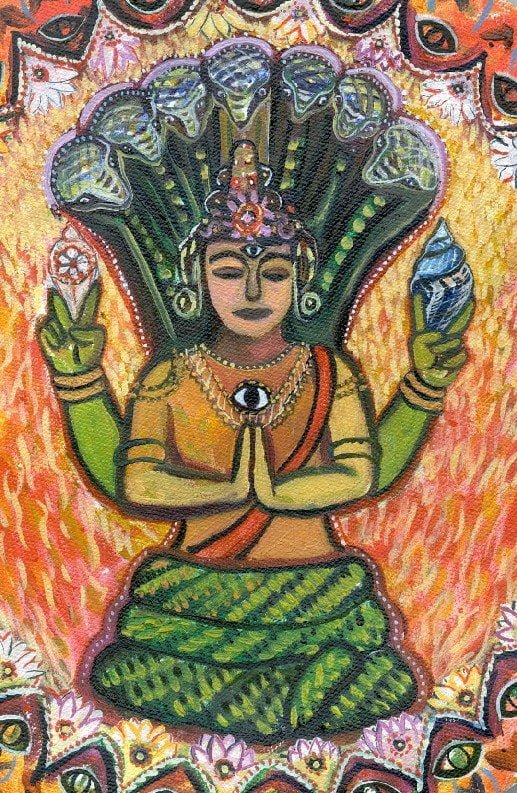
Do you ever set off on a journey not knowing exactly where you’ll end up? Even when you embark on a what you think is a certain path, you still may not arrive at your imagined destination.
That can be a good outcome, a bad one, or simply what is.
When I started interacting with Patanjali on this blog – teasing out each of his tightly packed Sutra – I did it as an exercise in discipline. […]
Source: themetalfairytale.tumblr.com via Carrie on Pinterest
I’ve not been well today. A stomach complaint – severe cramping and slight nausea. Perhaps a dose of gastro or food poisoning? It could have been to do cleaning out a big mucky garden pot. Maybe something that is meant to live outside got inside me.
So here I am, all alone at home, while everyone in our household has gone to choir practice. I truly can’t remember having an evening alone for yonks. It’s exceptionally nice.
And, this is a special night too… […]
Source: dailydoseofstuf.tumblr.com via Michael on Pinterest
Yoga philosophy has a handy way to categorise elements of the material world. In Sanskrit there are three forces called gunas: tamas, which exhibits qualities of darkness, inertia, or heaviness; rajas, which equates with raw energy, passion, dynamism; and, sattva, which is defined as Being, clarity, or spiritual essence.
Objects can be characterised according to the above scheme, and so can human moods and personalities.
Think about it. At times you’ve probably felt yourself in a heavy mood, like a dark cloud is hanging over you (tamasic). […]
Source: weheartit.com via Christy on Pinterest
Have you ever heard of an exercise that’s done in personal development courses called “If you really knew me….”? It’s designed to create a greater depth of intimacy among the members of the group by sharing something of a personal nature. By opening up about a subject where there’s been fear or embarrassment attached to it, the speaker has an opportunity to let go and move on. […]
Source: Uploaded by user via Greg on Pinterest
One of the students from my Patanjali study group has inspired me. He was talking about his week and how he struggled to free himself from making judgments about people. […]
Source: yoga.in via Allied on Pinterest
The first time I went to the Iyengar Institute in Poona, India, I was a babe in the woods in so many ways. […]